Cold-Knowledge Blind BoxEpisode 54
How Coffee Futures Came to Be
From the 1880 New York corner that blew up, to Brazil burning coffee, the collapse of the International Coffee Agreement, the 1975 black frost and the record rallies of recent years, a look at where coffee futures came from and some of their quirks.
Contents14 sections
- Opening: A Latte That Got More Expensive
- The Years Before Futures
- 1880: Three Men and a Corner
- The Victims Open an Exchange
- So What Is a Futures Contract?
- The State Steps In: Brazil Hoards Coffee
- The Great Depression: Brazil Burns Coffee
- The International Coffee Agreement and 1989
- Today's Screen: ICE Coffee C
- Black Frost and Panic Buying
- Back to That Latte
- Ending: Buying Insurance on Prices
- References
- Image Sources
Opening: A Latte That Got More Expensive
Hi everyone, welcome to Cold-Knowledge Blind Box.
I've been buying lattes downstairs in the morning lately, and I noticed the price went up again. I muttered to myself: have coffee beans gotten expensive again?
I looked it up when I got home, and yes, they have. Over the past couple of years, New York arabica coffee futures climbed to all-time highs. In October 2025, they touched about $4.38 a pound intraday.
So I got curious. Coffee beans grow on hillsides in Brazil and Colombia. Why is their price set on an electronic screen in New York?
What's even stranger is that the market behind that screen wasn't created for speculation in the first place. Quite the opposite. It was set up by a group of merchants who had been badly burned by speculation, and who came together to fix it.
Let's start the story there.
The Years Before Futures
Let's begin with a question. Before futures existed, how was coffee bought and sold?
Simple: you paid cash and took the goods. An importer ordered a shipload of beans from Brazil. The ship spent a few weeks at sea, arrived in New York Harbor, and then the importer sold the beans to wholesalers.
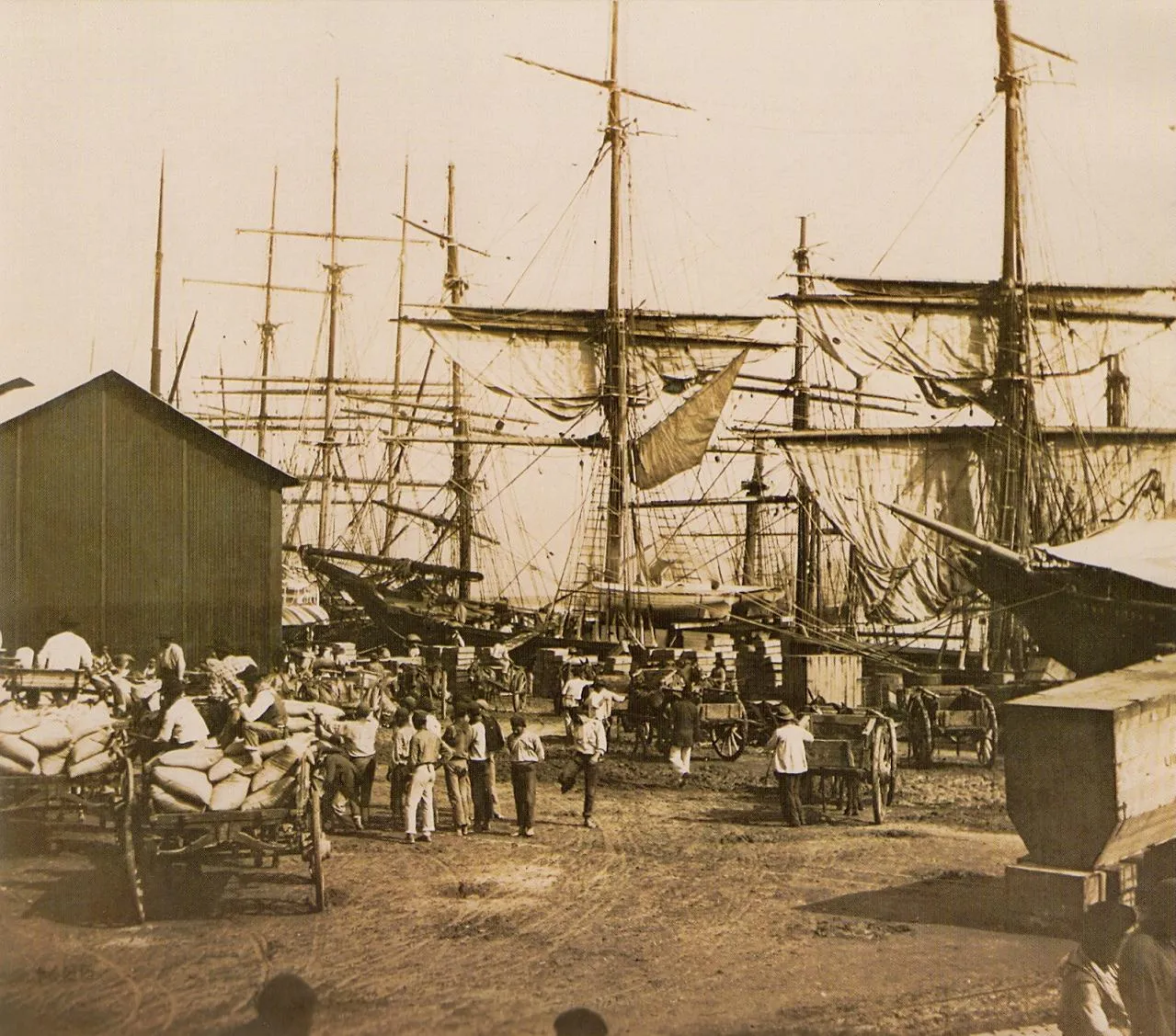
The problem lies in those few weeks.
When the ship set off, the beans might have been worth one price. By the time it reached port, the price could have dropped a lot. If you're holding a whole shipload and the price slips even a little, you lose a fortune. Back then, nobody could help you share that risk. Every rise and fall was yours alone to bear.
So someone thought: since prices are set by supply, if I buy up all the beans on the market, won't I be the one who decides the price?
Yes. And more than one person thought so.
1880: Three Men and a Corner
In the 1870s, three major American coffee merchants were later nicknamed the "Triumvirate." One was Kimball, a young man from Boston. The other two were New York merchants Arnold and Dyer. Let's just call Arnold "Old A" for short, since at the time he was known as the "Coffee King."
What these three did is called a "corner" in trader jargon: buying up stock frantically, controlling inventory, and driving prices up.
At first it went smoothly. But here's the thing about coffee: when the price goes up, Brazil plants and ships like crazy.
In 1880, beans kept pouring in. The port warehouses were stacked full, and no matter how hard they pushed, prices wouldn't rise. One account says that during the first eleven months of that year, New York coffee prices slid from 24 cents a pound to around 16 cents.
Then something dramatic happened. On December 4, Kimball suddenly died. He reportedly passed away after a card game. He was only 42.
Once he was gone, the company fell apart. Creditors saw trouble and came knocking. Three days later, on December 7, Old A's company declared bankruptcy. When the books were examined, he owed more than $2 million, and his assets covered only about half of that.
Then came a chain of collapses. For a while, the entire New York coffee trade nearly ground to a halt.
The Victims Open an Exchange
Here's the twist.
The people hit hardest by all this decided that they needed a market where everyone could lock in prices in advance, so that no single person could ever again choke the whole market.
The meeting took place in Old A's former office at 166 Pearl Street in New York.
On December 7, 1881, exactly one year after Old A's company went bankrupt, the New York Coffee Exchange was incorporated. Its first president? None other than the freshly bankrupt Coffee King himself, Old A.
On March 7, 1882, the exchange officially opened.
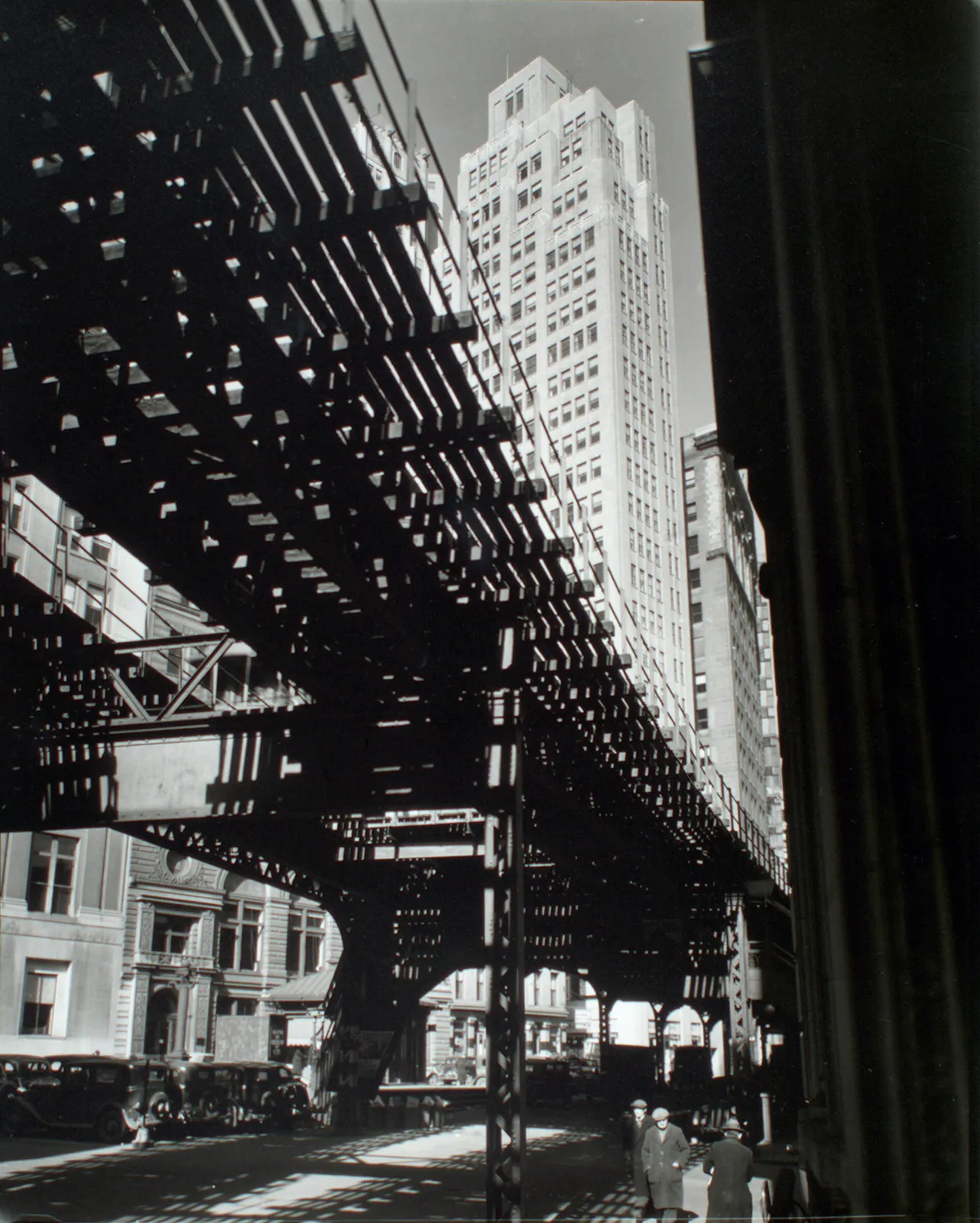
When it first opened, nobody trusted it. One old merchant recalled that the exchange became "the laughingstock of the entire trade," with almost no business. But slowly, importers discovered that the thing actually worked well.
So What Is a Futures Contract?
Where's the usefulness?
Say you're still that importer, with a shipload of beans on the ocean. You're worried the price will fall by the time it arrives. So today, on the exchange, you sell a contract for future delivery, locking in the price now. If the spot price really does fall, the contract earns back your loss. The two offset each other, and in effect you've bought insurance on the price.
Then who takes the other side of your trade? Speculators. They bet that prices will rise. They might make a fortune or lose everything, but without them, nobody would be selling you that insurance.
So the essence of futures comes down to one line: moving price risk from people who don't want to bear it to people who are willing to.
There's a delicious irony here. The exchange was created to prevent a monopoly, so what happened? In 1904, an American novelist wrote a book called The Corner in Coffee. To research it, he interviewed a number of brokers, and in the preface he joked at his own expense: after learning about coffee speculation, he swore he would never touch coffee again except to drink it.
The exchange never eliminated the gambling. It just gave the gambling some rules.
The State Steps In: Brazil Hoards Coffee
Okay, the era of private corners was over. But soon a much bigger player entered the game.
Not a merchant. A country.
Brazil.
At the start of the twentieth century, most of the world's coffee came from Brazil. In 1906, Brazil foresaw a massive bumper harvest. Think about it: a bountiful harvest should be good news for farmers, right?
But for coffee, a bumper harvest means prices crash.
So in February 1906, Brazil's three largest coffee states, São Paulo, Minas Gerais and Rio de Janeiro, signed an agreement in a small town called Taubaté. The core of it was simple: the government would borrow foreign money to buy up the surplus coffee and hold it off the market, keeping prices up.
Historically, this is known as the "coffee valorization scheme."
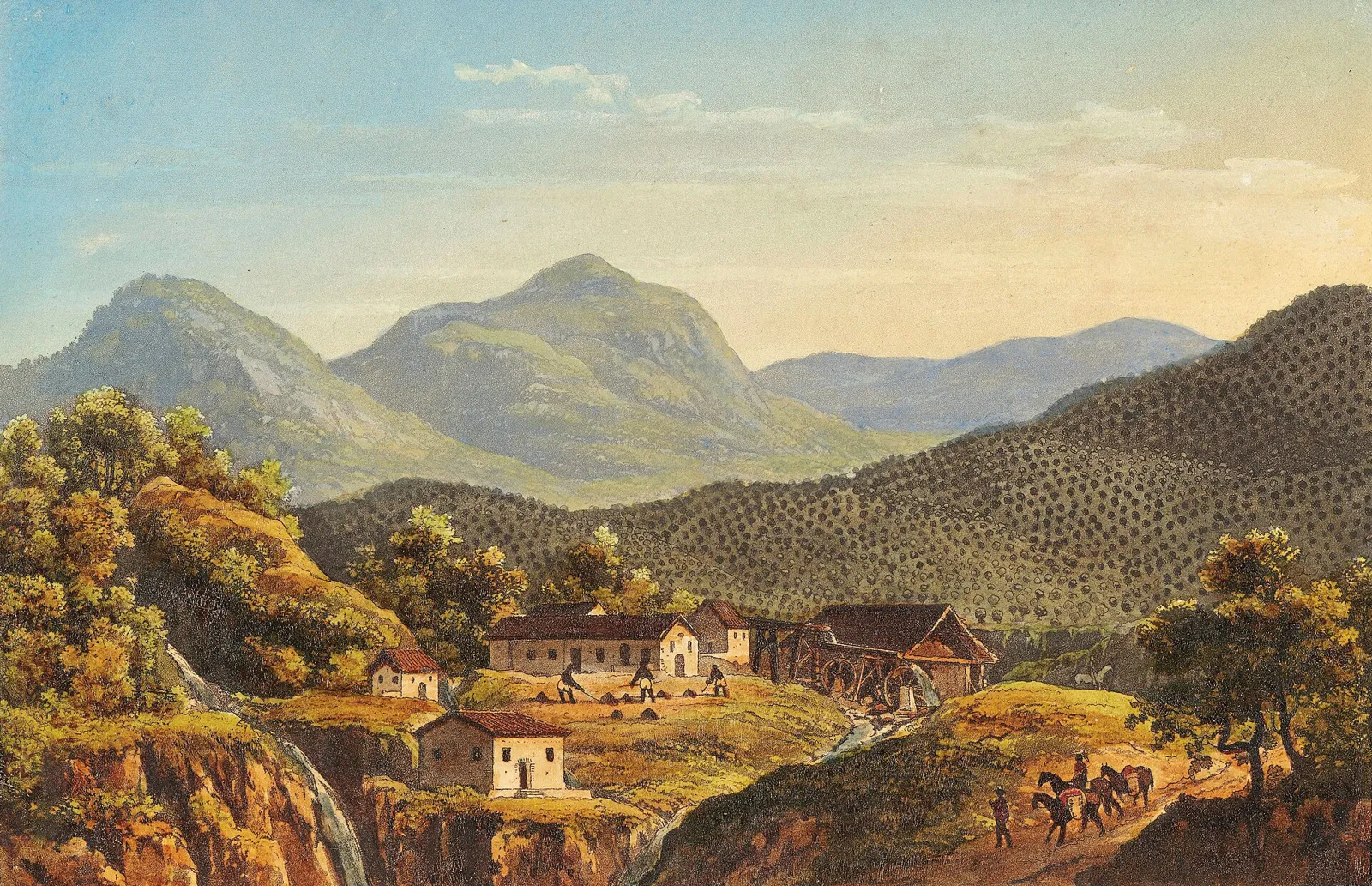
Look at the logic: it's exactly the same as what Old A and his two partners did. Hoarding, controlling supply. The only difference is that this time, the one doing the hoarding was a country.
And at first it worked. Prices were held up, coffee plantation owners in São Paulo made fortunes, and much of that money was later invested in São Paulo's industry.
The Great Depression: Brazil Burns Coffee
But, friends, can you hold prices up for one year? Ten years? Through a Great Depression?
In 1929, the New York stock market crashed, and nobody in the world had spare money. Coffee wouldn't sell, and the warehouses piled up.
What came next is the most surreal fact we'll talk about today.
Brazil started burning coffee.
Not a little. They burned it in huge batches, dumped it into the sea, and some accounts even say it was used as fuel for trains. According to a US law journal of the time, between June 1931 and August 1941, Brazil officially destroyed more than 72 million bags of coffee, each weighing 60 kilograms. A scholar's estimate puts the total at about 78 million bags by the time the policy ended in 1944, equal to roughly three years of world coffee exports at the time.
The world was struggling through hunger and depression, while on the other side of the ocean, one country was burning coffee to protect prices. That's what supply control looks like when it runs into a dead end.
The International Coffee Agreement and 1989
So what do you do when one country can't hold the line?
You bring in more countries.
In 1962, the International Coffee Agreement was signed. Coffee-producing and coffee-consuming countries sat down at one table and assigned export quotas to each exporting country. You can sell this much this year, and nobody sells more.
Why could it be signed at all? There's an important backdrop: the Cold War. The US didn't want to see Latin American countries plunged into unrest by coffee-driven poverty, so it was willing to back this quota system.
The system lasted nearly thirty years. One Yale economist estimated that during the agreement, coffee prices were on average pushed up by about 73 percent.
Then came 1989.
Think about it: what else happened in 1989? The Berlin Wall fell, and the Cold War was winding down. The reason the US had been propping up this system was gone.
At the same time, consumer tastes were changing. People increasingly wanted milder, higher-quality beans, but the quotas were still divided the old way. Brazil refused to give up its share, and the US pushed for rule changes. The talks dragged on for a year and collapsed.
On July 4, 1989, the International Coffee Organization announced the suspension of export quotas.
The floodgates opened, and beans poured out. The ICO's indicator price was around 116 US cents a pound in May 1989. A year later it had fallen to 73, and by May 1992 it was only 50 cents. It was cut in half in three years, and then some.
People later called this the "coffee crisis." Many coffee farmers never returned to good times after that.
So you see: from Old A to the Brazilian government, and then dozens of countries joining hands, humanity spent a century trying to control coffee prices by controlling supply. In the end, every attempt failed.
Today's Screen: ICE Coffee C
So if quotas are gone, who sets the price?
The answer: the market. That is, the screen we started with.
The New York Coffee Exchange from back then kept merging with other exchanges. In 1914 it added sugar and became the Coffee and Sugar Exchange; in 1979 it merged in cocoa and became the Coffee, Sugar and Cocoa Exchange; in 1998 it was absorbed into the New York Futures Exchange; and in 2007 it was acquired by the Intercontinental Exchange, ICE.
Today, the global benchmark price for arabica coffee is an ICE contract called "Coffee C." One contract covers 37,500 pounds of green beans, roughly 280 bags, and is priced in US cents per pound. The other main type of bean, robusta, trades mainly in London and is priced in US dollars per ton.
Here's a detail many people don't know.
Although most futures are bought and sold on screens, "Coffee C" can actually be delivered physically. Beans eligible for delivery must first be sent to warehouses certified by the exchange, and must pass professional cupping and grading. Only beans that qualify can be called "certified stock."
And different origins carry different premiums and discounts. For example, under the exchange's current rules, Colombian beans carry a premium for delivery, while Brazilian beans are discounted. The world's largest coffee producer delivers its beans at a discount in the very contract that prices its own coffee. That alone is a pretty fun fact.
Black Frost and Panic Buying
Okay, now that the rules are clear, let's look at a few of the most dramatic moments on this screen.
First, the "black frost."
In July 1975, southern Brazil was hit by the worst frost in fifty years. In Paraná state, it even snowed. According to a New York Times report at the time, about 1.5 billion coffee trees were killed or damaged by the cold.
Here's the key: the frost didn't damage the fruit already hanging on the trees. It damaged the trees' ability to bear fruit in the following year and the year after. So the real drop in output came one or two years later. The New York Times reported that in 1976, Brazil had expected to harvest 22 million bags, but in the end it harvested only 6 million.
How did prices move? Before the frost, Brazil's export price was under $70 a bag. By January 1977, it had climbed to $320, and it was still rising.
There's a particularly funny detail here. TIME magazine once wrote that Brazilian coffee farmers had a "traditional ritual" every winter: spreading frost rumors to push up prices on the exchange. And in 1975, the boy who cried wolf finally saw the wolf come.
The second moment is the last couple of years.
In 2024 and 2025, Brazil's weather kept going wrong. On top of tariffs and tight supply, arabica kept setting new records. In February 2025, Reuters used the phrase "panic buying" to describe the rally, which set new records on thirteen consecutive trading days. In October it hit another record, touching about $4.38 a pound intraday.
And this year? The situation has flipped. Brazil is having a record bumper harvest, and the ICO says its composite indicator price in September fell by almost 9 percent from August.
But one number has kept traders up at night: certified stocks. In mid-September this year, certified arabica inventory on the New York exchange dropped to just over 210,000 bags, reportedly the lowest since 1999. Brazil's September exports hit a 20-month high, yet inventories stayed low. Why? Because beans sold directly to roasters don't automatically end up in exchange warehouses.
So there's an awkward situation: lots of beans on the outside, very few beans eligible for delivery. In early October, arabica briefly climbed back above $3 a pound, then fell back again within a week.
Back to That Latte
Okay, we've covered a lot. Let's go back to the latte we started with.
When futures rise, does the coffee shop raise its prices right away? When futures fall, does it cut prices right away?
Friends, most likely not.
Think about it. In a latte, the coffee beans are only part of the cost. There's also milk, the cup, rent, labor, electricity, and the brand. If beans double in price, the cup price doesn't double along with them.
Large roasters and chains, meanwhile, often use futures to lock in prices months or even longer in advance. That's exactly the purpose the exchange was invented for. So if futures rise today, your latte may not go up until six months from now. If futures fall today, your latte may not fall at all, because the shop has locked in last year's high price.
The few extra dollars I paid for my latte that morning might have been the echo of last February's "panic buying."
Ending: Buying Insurance on Prices
So you see, coffee futures were invented more than 140 years ago by a group of merchants ruined by speculation, to guard against speculation. Later, Brazil tried to control prices through hoarding and burning coffee, and dozens of countries tried to join forces. Each attempt failed. In the end, prices returned to that screen, where they are set by weather, frost, inventories, and countless people betting on tomorrow.
What people can do is never control coffee prices. What they can do is buy a little insurance on them.
The next time you pick up a cup of coffee, you might think: this drink is a tree on a Brazilian hillside, plus a gamble on a New York screen.
Alright, that's it for this episode of Cold-Knowledge Blind Box. See you next time!
References
- The 1880 corner, Kimball's death, Arnold's bankruptcy, the exchange's incorporation on December 7, 1881 with Arnold as its first president, the "laughingstock" recollection, and the 1904 novel The Corner in Coffee: Uncommon Grounds (Mark Pendergrast), Chapter 6: link
- The meeting at 166 Pearl Street and trading starting March 7, 1882: Ukers, All About Coffee, Chapter 30: link
- The 1880 price drop from 24 to 16 cents, Kimball's death at 42 after a card game, Arnold's debt of $2.1 million: Corner sur le café de 1880: link
- The exchange's mergers (sugar added in 1914, cocoa in 1979, NYBOT in 1998, ICE in 2007): Wikipedia, Coffee, Sugar and Cocoa Exchange: link
- Coffee C contract specifications (37,500 lb, US cents per pound, physical delivery, origin premiums and discounts): ICE: link 1; link 2
- Thirteen consecutive record days in February 2025, "panic buying": Reuters: link
- The record of $4.3795 a pound in October 2025: Bloomberg: link
- The Taubaté Agreement (February 1906): Wikipedia: link
- June 1931 to August 1941, 72,583,000 bags destroyed: Duke Law, Law and Contemporary Problems, "The Inter-American Coffee Agreement": link
- About 78.2 million bags through 1944, roughly three years of world exports: Journal of Economic History, "Coffee cartel 1930–1940": link
- The 1962 International Coffee Agreement, the suspension of quotas on July 4, 1989, and why the talks collapsed: Wikipedia; LA Times, July 5, 1989: link 1; link 2
- ICO indicator prices of 115.9, 73.3 and 50.0 US cents: Gilbert, The Long Run Impact of the Ending of Coffee Control: link
- The agreement's price increase of about 73 percent and the Cold War backdrop: Igami (Yale): link
- The 1975 black frost: 1.5 billion trees, 22 million to 6 million bags, $70 to $320 a bag: New York Times, January 12, 1977: link
- The frost-rumor "ritual" and snow in Paraná: TIME, "Coffee Nerves": link
- September 2026: ICO indicator price down 8.7 percent, record Brazilian crop, certified stocks of 217,600 bags (lowest since 1999): ICO monthly report; Comunicaffe: link 1; link 2
- October 2026: arabica back above $3, Brazil's September exports at a 20-month high, and the difference between exports and certified stocks: Cocoa Intel; World Coffee Index: link 1; link 2
Image Sources
- Cafe porto Santos 1880.jpg: Marc Ferrez, public domain
- Hanover Square, Coffee Exchange, and 2nd & 3rd Ave. El (NYPL).jpg): Berenice Abbott, 1936, public domain
- Johann Jacob Steinmann - Plantação de café.jpg: public domain
- Roasted arabica coffee beans Minca.jpg: Roger Burger, CC0