Cold-Knowledge Blind BoxEpisode 26
Talking About Voltage: Why Are There 220V and 110V?
Why some home outlets are 110 and others 220: behind the sockets is a battle over electric current.
Hi everyone, welcome to Cold-Knowledge Blind Box. I wonder if you've had this experience when traveling abroad. Many countries use 110V, so for a three-prong appliance like a hair dryer, you need a power converter to use it. But for a two-prong plug, like a phone charger, you don't need one. In modern life, we can hardly take a single step without electricity.
In this episode, let's talk about the story of electricity, and why there is a difference between 220V and 110V household voltages. Behind it, there was once a technology war, and also the question of what the ultra-high-voltage power lines we often hear about in the news are all about.
Before we start the story, let me briefly review the basic concepts of voltage and current. Voltage and current are like a water pipe system. Voltage is like water pressure, current is like the speed of the water flow, and resistance is like an obstruction inside the pipe. When you pinch one end of a water hose, you are effectively adding pressure, and the water flows faster. The higher the voltage, the faster the current. When you need to work in an environment full of electricity, you wear insulated gloves. The resistance of these gloves is very high, which is like blocking the current and forming a layer of protection.
The basic unit of voltage is the volt, written as V. The unit of current is the ampere, written as A. The unit of resistance is the ohm.
We have often joked about how slow Apple chargers are, and the reason is that for a long time they used a 5V/1A standard, which made charging slow. When you charge an electric car, you may have experienced this too: when the voltage at the charging pile is insufficient, charging also slows down.
The world's first electrical systems used 110V.
In 1882, Edison built the world's first direct-current power grid in New York, using 110V to light 400 lamps. Why 110V?
There were several main reasons. The first was material limitations. Electric current has to be conducted through wires, which means a large amount of copper is needed.
At the time, copper wire was extremely expensive. If the voltage was too low, like 50V, you needed thicker copper wire. If the voltage was too high, like 200V, the light bulbs would burn out easily. 110V was the limit that carbon-filament light bulbs could withstand.
It's just like early phone chargers, which only offered 5V/1A. It wasn't that fast charging was technically impossible. It was that batteries and chips at the time could not handle it.
The second was safety. Insulation materials in the early days were unreliable. The electric shock death rate at 110V was about 3%, while at 200V it soared to 15%. Just like children's toys that use 3V batteries, it's not purely a technical question. It's more a matter of safety.
The third was transmission distance. Direct current cannot be stepped up, and there were no transformers at the time. That means electricity had to leave the power plant at a relatively low voltage, such as 110V, and be sent directly to users. This meant the distance between the power station and users was limited, generally no more than 1.6 kilometers. As a result, the supply range was relatively small.
It's like a spring on a mountaintop. Only the villagers living nearby can drink from it. Any place farther away simply can't get the water flow, and people have to come over and fetch it themselves. That is why the service radius of power stations at that time could not exceed 1.6 kilometers from the city center. 110V was just enough to power the wealthy district of Manhattan in New York.
Seen this way, 110V direct current was not really a good solution. It had far too many limitations. Then another inventor, Nikola Tesla, stepped forward. In 1888, he invented the alternating-current system. Through transformers, alternating current could easily be stepped up to over 10,000 volts for transmission, and then stepped down at the point of use. This is the solution our power systems use today.
The Westinghouse Company used this technology to light 100,000 lamps with alternating current at the World's Columbian Exposition in Chicago, with transmission distances reaching an astonishing 32 kilometers.
But Edison regarded alternating current as his biggest competitor. After all, a country's power system could only use one solution: either direct current or alternating current. Edison was desperate to pour all the money he had earned in the direct-current era into killing this innovation. To frighten the public, Edison publicly electrocuted an elephant with alternating current, creating a public opinion of "alternating current danger." He even pushed New York State to use alternating current for executions, and the word "electric chair" was born from this.
But in the face of overwhelming technical advantages, the more efficient alternating-current solution still won. After all, who would want to live next door to a power plant?
For the story of direct current versus alternating current, there is a film called The Current War, which I also recommend here.
Edison's 110V has not disappeared. As a legacy standard, it is still used in the United States, Japan and other places. Of course, some countries actually use 120V, but they still keep the habit of calling it 110V.
As the technology matured, most of continental Europe adopted a 220V design, and this greatly influenced the Soviet Union. Although some concessions in China during the Republic era also used a 110V design, after the founding of New China, when faced with the choice between 110V and 220V, engineers did the math:
- With 110V supply, the transmission line from Shanghai to Beijing would need 87 substations.
- With 220V supply, the number of substations would be cut in half, and copper usage would be reduced by 45%.
In 1956, China officially set 220V as the standard. This decision reduced the cost of the grid construction at the time by 30%, and it also laid the groundwork for the later "West-to-East Power Transmission" plan.
The Soviet Union once suggested that China adopt 127V, but our engineers held firm against the pressure and chose 220V, which was better suited to the country's vast territory. Today, China has the longest ultra-high-voltage transmission network in the world, at 48,000 kilometers. Each year, the amount of electricity sent from the west is equivalent to the output of ten Three Gorges power stations.
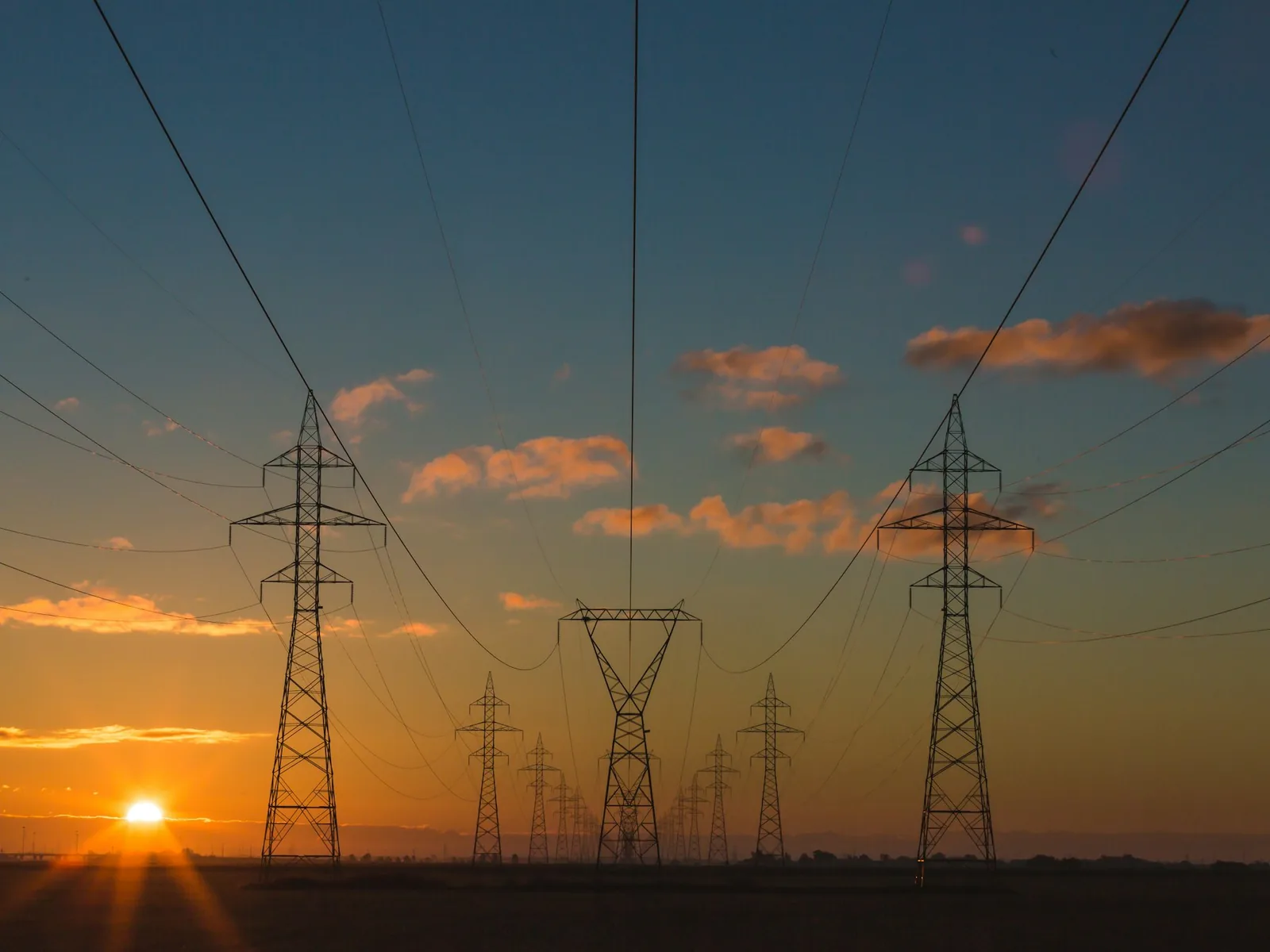
As we have built a whole range of appliances, and electric vehicles have arrived, our demand for electricity keeps growing. So what do we do? We have to keep raising the grid voltage. This led to the development of ultra-high-voltage technology, which allows solar and wind energy from the great Gobi and deserts in the west to be converted into electricity and sent to the eastern coast. The higher the voltage, the greater the distance it can transmit.
China's emphasis on ultra-high-voltage technology has given it 80% of the world's ultra-high-voltage technology patents, and its equipment is more than 90% domestically produced. The most direct benefit is that China's electricity prices are among the lower tier globally. The average residential electricity price across the 35 OECD countries is 1.35 yuan per kWh, while China's is 0.54. The UK's price is 2.67 yuan per kWh, Germany's is 1.96, and the US's is 0.83.
Of course, electricity prices fluctuate in every country.
By the way, I wonder whether you remember an event from a few years ago called Earth Hour, when everyone turned off their lights for an hour to reduce electricity waste. That kind of event is no longer promoted as much, because power plants never shut down, and nearly all the electricity they generate gets used. If, during peak hours, demand at the end of the grid suddenly drops, the excess electricity actually puts a load on the power system. So activities like this are no longer encouraged.
Well then, that's all for today's Cold-Knowledge Blind Box. I hope that after hearing today's story, you have a bit more understanding of the numbers on the outlets at home.
Feel free to leave a comment and share your thoughts with us! I'm your content guide, and see you next time!