Cold-Knowledge Blind BoxEpisode 3
From Ice Blocks to Air Conditioners: How Humans Fought the Heat (Part 1)
Before refrigerators, how people stored and transported ice to get through the summer.
Introduction
It's so hot! July may well have been the hottest month on record. It's hard to imagine what a world without ice cubes and cold drinks would be like. But did you know that ice cream was invented before refrigerators? That means even without a fridge, people in the nineteenth century could still get ice to make ice cream. This episode will be split into two parts. We'll go from ancient ice making, to the nineteenth-century ice trade, to the invention of modern refrigerators and air conditioners, so you can see how much effort people put in to survive the blazing summers!
How Did the Ancients Make Ice?
Have you ever sipped an iced drink in front of the air conditioner and imagined what it would be like to travel back in time and get through the summer? Air conditioning is out, but could the ancients possibly serve you ice in the summer? Well, yes, they could! Ancient people had no refrigerators, but they did have winter! That's right, they stored winter ice to use in summer.
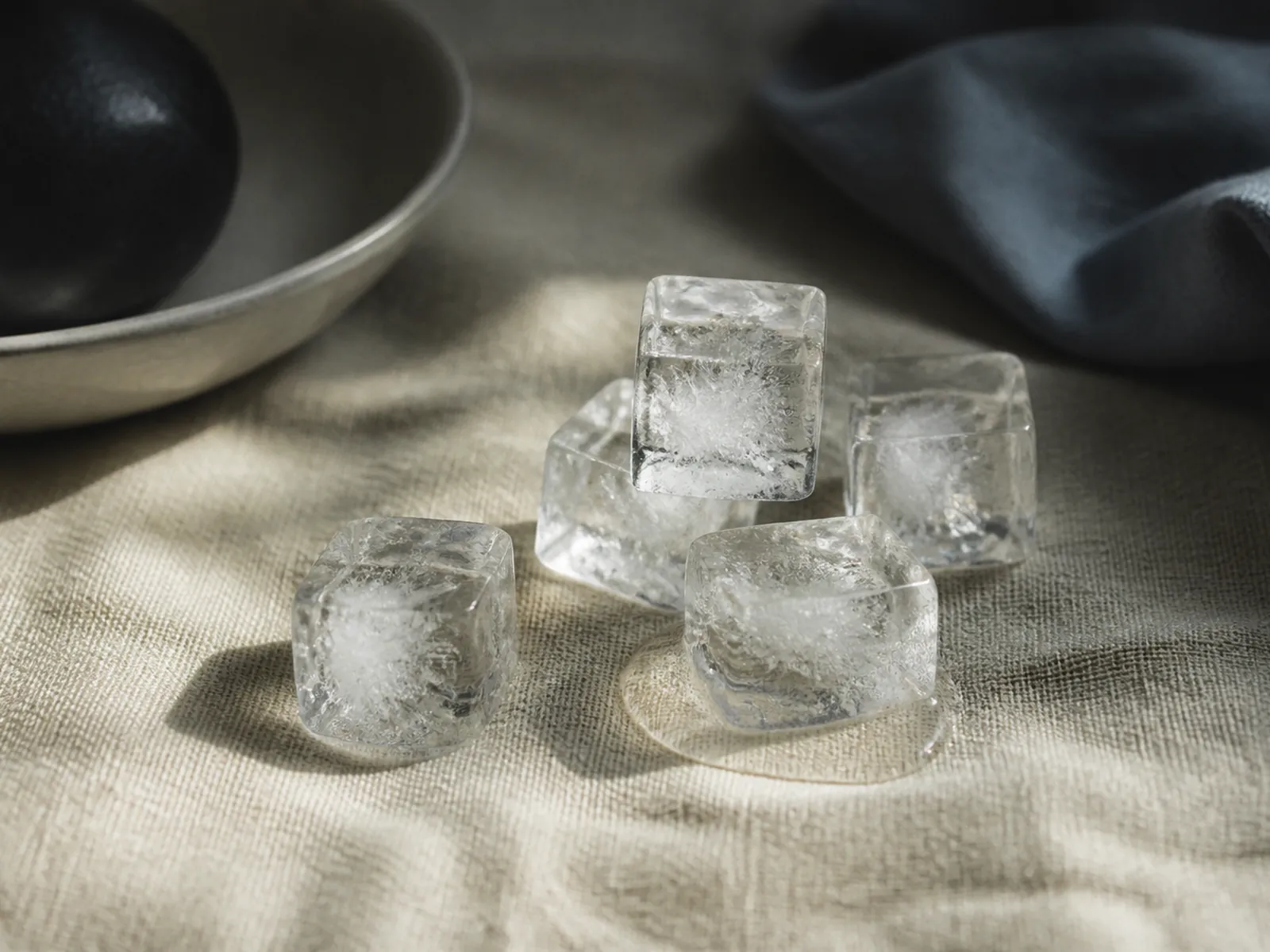
In the Forbidden City, for example, there was a dedicated ice cellar. It was dug deep underground. At the winter solstice, workers were sent to lakes near Beijing, where they dug a pool beside the water. Once the water inside had completely frozen, craftsmen were sent out to cut it into blocks, and then the blocks were hauled back to the ice cellar one by one for storage. In summer, the ice cellar was opened for the royal family to enjoy. But this method used up a huge amount of ice, and about two-thirds of it would melt away. This approach, which relied on temperature differences and costly ice cellars, was destined to be reserved only for officials and nobles.
Beyond that, the ancients came up with other ways to make ice. In the late Tang dynasty, while producing gunpowder, people accidentally discovered that when saltpeter (potassium nitrate) dissolves in water, it rapidly absorbs heat, causing frost or ice to form on nearby objects. But the ice made this way wasn't the complete ice block we imagine. At most, it could form a thin layer of ice on the surface of the water, or create ice fragments in it. Calling it a way to cool water might be more accurate.
But that was enough, because saltpeter could be reused five to ten times. Although the cooling effect weakened each time, the cost of making ice was extremely low. The method quickly became popular among ordinary people. In the Song dynasty, the poet Yang Wanli wrote in his Ode to Lychees: "In the imperial city, at high noon in June, people cooking over the stove sweat like rain. A cry of 'ice for sale' comes from across the water, and the travelers feel refreshed even before they've had a sip." This describes the scene of merchants selling ice and travelers buying it at a summer market. The poem is still remarkably vivid today. The happiest moment of summer is taking a cold drink out of the fridge. Even before you've taken a sip, your "heart and eyes" already open up.
Were There Other Ways to Get Ice?
You might ask: if you wanted a whole ice cube in your cola, wouldn't you have had to wait until the Industrial Revolution began? No, no. The Industrial Revolution began in the seventeenth century, but modern refrigerators and air conditioners didn't appear until the twentieth century. What? So we've only been able to cool things reliably for a little over a hundred years! Before that, were there any other ways to get ice? Yes: wait for huge commercial innovation in transportation and global trade.
The turning point came in nineteenth-century North America. North America sits at a lower latitude than Europe, so its summers are naturally hotter. To put it in perspective, the main countries of Europe are roughly at the same latitude as northeastern China, or even a bit further north. North America, on the other hand, sits at about the same latitude as central and southern China, Hunan and Hubei. So North America's summers are hotter than Europe's, and on top of that, the continent is vast, so food spoils easily during transport.
Picky European travelers often mocked North America's rotten meat and cheese. Moreover, North American agriculture was highly developed, and people there had far more food than they could eat, so they naturally wanted to ship it elsewhere to sell. To reduce spoilage in transit, the demand for ice harvesting and refrigeration was enormous.
Now, in 1805, a Boston merchant named Frederic Tudor, whom we'll just call "Potato Bro" from now on, heard a passing remark at a party: "Why not send pond ice to the islands of the Caribbean in South America?" The Caribbean sits at roughly the same latitude as Singapore. The speaker meant nothing by it, but the listener took it to heart, and Potato Bro really started to get the idea.
Boston is in the northwest of North America, where winters are cold and there are plenty of lakes, so ice was no rarity, and the ice harvesting industry was very well developed. Getting ice that could be shipped wasn't difficult. The Caribbean, meanwhile, is close to the tropics, with scorching temperatures, so there would certainly be a market for ice there.
No sooner said than done. Potato Bro spent a fortune to harvest 130 tons of ice from his own pond and shipped it by boat to the tropical areas near the Caribbean, where he began selling it. This was the first large-scale, long-distance commercial shipment of ice in human history.
Did he get to the destination and make a fortune? No, no. Potato Bro's ice didn't sell well, and in the end he lost 4,000 dollars, which is about 200,000 dollars today, or close to 1.4 million yuan. Ha, that's almost two top-spec new ES8s, gone. He shipped three more batches of goods to Cuba, and those losses were even bigger. Give yourself three seconds to think: what was the reason for his failure?
The locals liked ice very much, but since their homes had no good way to store it, they didn't dare buy large amounts. And if he switched to small-scale trading, his income would be too small to cover the shipping costs.
On top of that, during transport Potato Bro lost a lot of ice himself, and at the destination there were no refrigerated warehouses to sell from, so most of the ice melted before it was sold. Did you guess the reason for the loss?
After a few years of this, he had successfully turned himself into a "negative-wealth" man, a pun in Chinese on "negative," and he ended up in prison too. He also became a laughingstock among the self-satisfied so-called elites back home in Boston.
After getting out of prison, Potato Bro didn't give up or go through the motions. He concluded that his failure was not because there was no market for ice, but because he hadn't found the right way to sell it. But he also realized that to sell ice in the tropics, there had to be a way to keep it from melting too much in transit, and there had to be a suitable warehouse to store it locally. He found that people there mostly used old-fashioned root cellars to store ice, and with this method, after one quarter, the ice would melt by six tenths. So he spent a great deal of time experimenting with how to keep ice in the tropics. After repeatedly testing all kinds of building materials and structures, he finally invented a new method for building cold storage, which allowed him to set up cold storage on site.
He also made innovations in transport. He noticed that ice cut by hand came in all different shapes and sizes, so it would easily slide around in the hold and could even damage the ship's hull. So he invented a new way of harvesting ice: fitting a sawtoothed ice blade onto a sled pulled by horses, which would run back and forth across the ice again and again. After several passes, the ice surface would be scored into a checkerboard pattern, and then workers would pull out the pieces to get standard rectangular ice blocks.
The ice blocks were then separated by thick layers of sawdust. This not only insulated the ice blocks from the hot environment, but also stopped them from freezing together after melting, so the ice could be stored in the hold for a longer time.
When it came to marketing, he was truly unmatched. Potato Bro often hired lecturers to give speeches in the square about the wonders of ice, and he even hired people to pretend to be sick, showing on the street how ice could relieve the summer heat. He used different pricing strategies for different customers. For the rich, he sold pure, clear ice at a high price; for the poor, he sold melted, cheap ice water. He supplied ice to restaurants to help them make cold drinks. He offered ice for free at first as a promotional tool, and only started charging once customers had developed the habit.
After more than a decade of effort, Potato Bro had a fleet that shipped ice regularly to Cuba and the islands of the Caribbean, and his ice business was gradually getting on track. But that was still far from making him a millionaire of his time, which is the equivalent of today's multimillionaire.
So he launched another round of ice selling. This time he set his sights on India. India lies in a tropical climate near the equator, and at that time it was under British colonial rule. The British rulers in India also welcomed Potato Bro's ice business. The voyage from Boston to Calcutta in India took four months. But with the technical improvements Potato Bro had made, his fleet could keep the loss in transit for 180 tons of ice to under 80 tons. The remaining 100 tons were still as precious as gold to Indians at that time, and they sold out very quickly. After twenty years of continuous effort, Potato Bro finally became one of the richest men in America.
Ice was not only popular in India. Potato Bro also brought his ice to Hong Kong. The Hong Kong government granted him a 75-year lease on land in the Central district of Hong Kong Island, on the condition that he provide ice to public hospitals at low prices. Why? Because the British troops from Europe were not used to Hong Kong's heat, and many of them suffered from heatstroke, and some even died. So there was an urgent need for large quantities of ice. Hong Kong still has a street called Snow Factory Street, named after the main ice factory that once stood there.
The boom in the ice trade also gave rise to another industry, cold chain transport.
The American Midwest has vast plains. These great plains were conquered early on and turned into cattle ranches. But the people in the Midwest who produced the beef were sparse, while the population centers that consumed it were in the eastern cities.
In other words, people in the East couldn't get beef, and the beef in the West had no one to eat it. But now, thanks to Tudor's ice, the two could be matched up. Beef was no longer afraid of long-distance transport, because ice could keep it fresh. Ice cream also became popular in Europe and America at this time. You can even see ice cream advertisements from the nineteenth century.
Summary
From the ancient ice cellars to the ice trade of the nineteenth century, we can see that humans kept up a continuous stream of technical innovation and commercial exploration. No matter how hard life gets, we'll find a way to get a little convenience, and who knows, maybe it will change the world! Stay curious, learn a little something every day. In the next episode, the Cold-Knowledge Blind Box will introduce the stories behind the road to modern refrigerators and air conditioners. See you next time!