Cold-Knowledge Blind BoxEpisode 16
How Salmon Ascended to the Altar
How salmon went from an ordinary fish to the star of the sushi counter.
Hi everyone, welcome to Cold-Knowledge Blind Box. When was the last time you ate Japanese food? On the weekend I suddenly had a craving and wanted to treat myself to some sushi, and I ordered a plate of salmon too. When it arrived, I couldn't help wondering: how can salmon be sold at such a high price? When I looked it up, I found that the word "salmon" is even connected to Cantonese.
In this episode, we'll talk about the story of salmon and see how it became a cultural symbol of a high-end lifestyle.
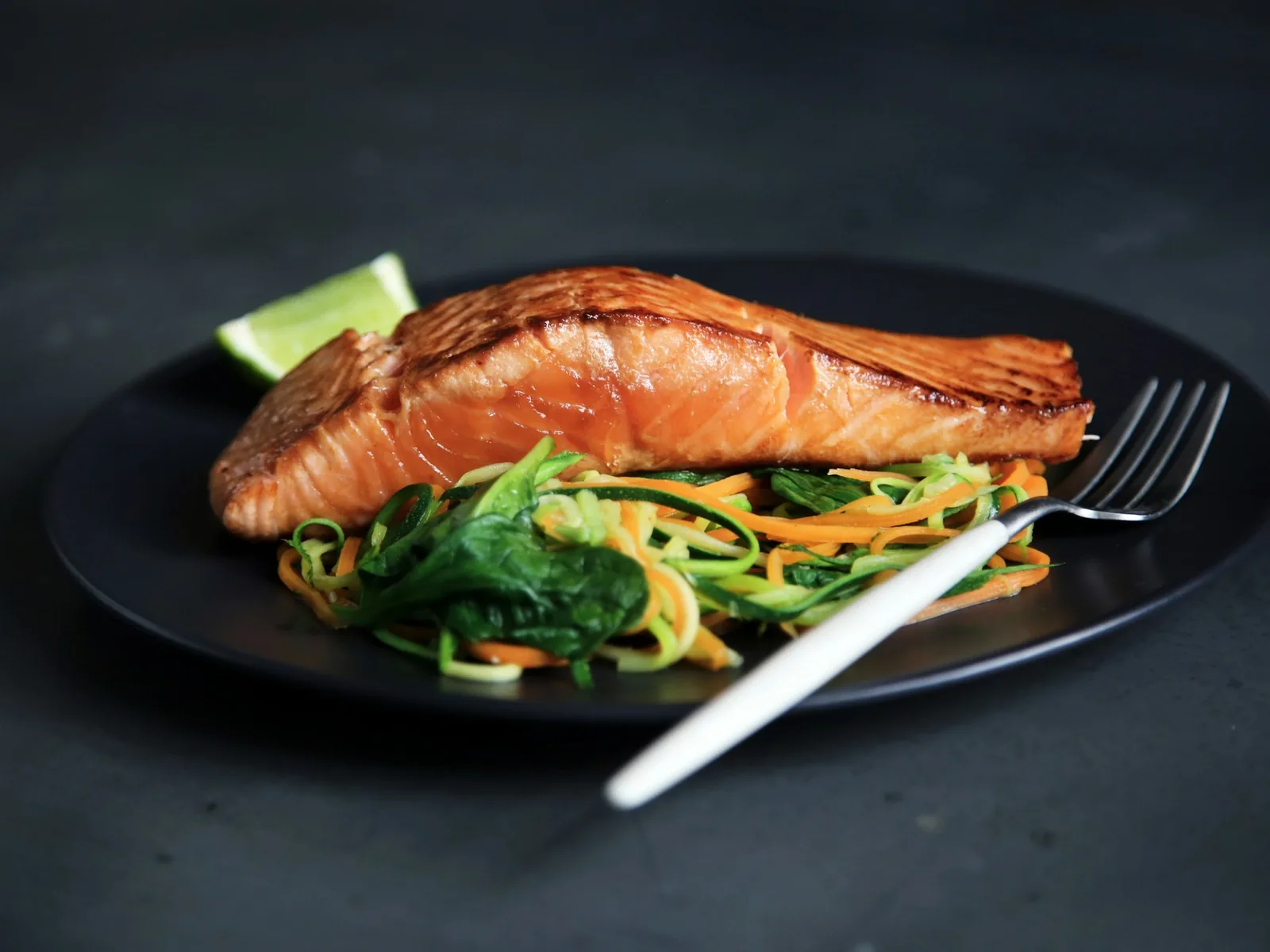
When you think of salmon, what comes to mind? A warmly decorated Japanese izakaya? The exquisitely arranged sushi platter in a fine restaurant? The greasy texture on your tongue, or that bright orange-red color?
Salmon, also called guiyu (鲑鱼), has a unique way of life: it has a strong sense of belonging to the home stream where it was born. Salmon eggs first hatch in clear freshwater rivers. After the young fish have grown in the river for a while, they begin to swim toward the sea. Each summer, they have to escape from all kinds of large fish that hunt them in the ocean, such as whales. A pod of 300 orcas can wipe out 1,000 tons of salmon in a single day.
After escaping the mouths of whales and other dangerous sea creatures, they finally reach the rivers, and by then the environment has become freshwater. The salmon's body goes through a series of physiological changes to adapt from salt water to fresh water. Their gills and kidneys adjust to keep the salt balance in their bodies, and their body color also changes. This process is called "osmoregulation."
The purpose of salmon is to return to the little stream where they were born and spawn. Their offspring then repeat the cycle, swimming out to the ocean and returning to their home. They have lived this way for fifty million years. Their survival depends on the most tragic population strategy: the "fish-and-sea tactic" of reproduction. Along the way, they feed the other animals of nature, and of course, that includes us humans.
The Nüzhen people who lived in the northeastern forests learned very early on how to hunt this fish in the rivers. Every summer, when salmon came back to the rivers to spawn, they would hold a sacred ceremony and shout "damaha." They believed the fish would return on time in autumn, a gift from heaven that would feed them through the winter.
Up until the Empress Dowager Cixi's time, the closing dish of the New Year's Eve dinner was a plate of dumplings. This was a tradition their ancestors had kept, and the filling of these dumplings had to be made with damaha, which is today's chum salmon. Yes, salmon and chum salmon both belong to the salmon family. The only difference is that because of geography, one is a Pacific salmon and the other is an Atlantic salmon.
The salmon we talk about today refers to the Atlantic salmon from Norway. How did this food come to hold its status today?
Let's go back to 1885. A shipment of fresh salmon from Norway was carried to Guangzhou. The people of Guangzhou were curious and asked the Norwegians what kind of fish this was. The Norwegians, quoting European Latin, told them it was called salmon, meaning "the fish that leaps vigorously." So, after hearing this English word, the people of Guangzhou began introducing it to the whole country in Cantonese as 三文鱼, or saam man jyu, "sam man yu." It sounded expensive, and it could be eaten raw.
The ship carrying the Norwegians and their salmon continued eastward, and when it reached Japan, they found the Japanese were not so easy to fool as the people of Guangzhou. On board was a Norwegian fisheries official named Listo. Ten years earlier, he had led a team to Japan to try to sell Norwegian seafood to the Japanese. But he was turned away, because Japan was already a major fishing nation and had no shortage of seafood.
Yet in 1985, when Japan's economy had become the second largest in the world, domestic seafood could only meet 50% of demand.
The Norwegians saw their chance. They mysteriously told the Japanese: we have brought a boatload of high-grade raw fish, perfectly suited to the texture of sashimi that you Japanese love. The Japanese were intrigued. The Norwegians unwrapped the packaging layer by layer, and the Japanese looked and said: what is this? Isn't it just salmon? Japanese nobles had never eaten raw salmon sashimi in thousands of years. Besides, doesn't it have parasites? Anyway, we have it in our rivers too, so don't try to sell it to us at a premium.
Listo was rebuffed. He had to go back to Norway and find another way. He found a Norwegian advertising company and hoped to use marketing to force open the door of the Japanese market. He also worked out a brand strategy: Norway's seawater is very clean and pure. Salmon grows in icy cold seawater, so it has no parasites.
But until 1995, salmon imports into Japan showed no explosive growth. Then, in 1995, the Japanese economy began to slide downhill, and just at that moment, Norway's salmon was in severe oversupply. There was so much of it that they were practically willing to sell at rock-bottom prices. The Norwegians found a Japanese company specializing in cheap food for ordinary people, called Nissui Chōteki (尼西蝶). They mainly sold low-priced ingredients such as frozen dumplings, frozen chicken pieces and frozen squid.
Salmon then had its chance to be made into sushi and placed on store shelves. Nobody expected that the orange-red color would be so attractive to the Japanese people, and that they would all love this greasy, rich raw fish. After all, when the economy is bad, who can refuse a box of cheap and nutritious food? Hey, didn't someone say the Japanese didn't like eating raw salmon?
This probably means the Norwegians picked the wrong target from the start, because Japanese nobles and Japanese commoners were two entirely different groups of people.
Dazzled by Japanese money, the Norwegians soon set their sights on the Chinese market. This time they were even more confident and more condescending when speaking to the Chinese: look, eating raw salmon is a tradition in both Japan and Norway. It's very high-end. And you must not ask for too much of it.
And so, salmon began to gallop ahead in China, and rose to its unshakable position today.
So can salmon actually be eaten raw? In truth, that's a strange tradition the Norwegians exported. Anywhere in the world where there are salmon, except in Norway, everyone knows that they carry parasites and should not be eaten raw.
Any creature with a freshwater life history has some probability of being infected with parasites. Crayfish and crabs, for example, should not be eaten raw. Sea fish can be eaten raw because the saltwater osmotic pressure is high and parasites are few. But any salmon spent its early life in freshwater, and only entered the ocean after it became an adult.
So does that mean raw salmon can never be eaten? Not quite. According to the food guidelines of various countries, you should freeze it at minus 20 degrees Celsius for at least 24 hours. Or you can simply eat salmon roe, since fish eggs generally have a lower probability of carrying parasites.
Well, that's the end of this episode of Cold-Knowledge Blind Box. If you have any other cold knowledge you'd like to hear, you can also open the NIO app, go to the Friends screen, find the community NIO Radio Shenzhen City Branch, and share the cold knowledge you like with us.